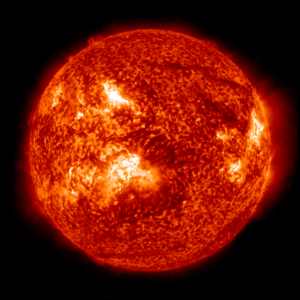
Welcome to the Galway Astronomy Festival 2026.
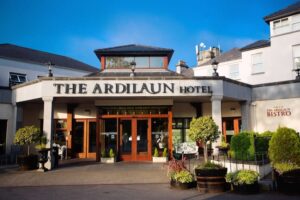
This years festival takes place at the Ardilaun Hotel, Taylors Hill, Galway H91H29F
For hotel booking please see note at bottom of page
The Ardilaun Hotel
Festival Timetable
09:00 – 10:00 – Registration
10:00 – 10:15 – Opening address
10:15 – 11:15 – Dr Christian Ginski
11:15 – 12:15 – Joseph Fenwick
12:15 – 14:00 – Lunch & Workshop (12:30)
14:00 – 15:00 – Dr Laura Hayes
15:00 – 16:00 – Michael O Connell
16:00 – 16:30 – Tea/Coffee break/Raffle tickets on sale
16:30 – 17:30 – Dr Matt Redman
17:30 – 18:00 – Festival raffle and final discussions
19:30 – Festival evening dinner
Friday 30th Jan 8:00 pm. – Festival Movie – Due to continuing repairs at our usual movie partners, we are showing a special screening at the Ardilaun Hotel – Use this link to book your free ticket and please read restrictions carefully. https://www.galwayastronomyclub.ie/galway-astrofest-festival-movie-night-2026/

Saturday 31st Jan. Trade Displays and Exhibition
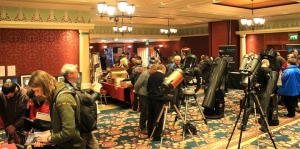
Running alongside the day’s other events some of Ireland’s largest sellers of astronomical equipment will have their wares on display. The hall will also host stands providing information on Dark Sky festivals, displays of astrophotography, information stands and more.
Lecture Program – Sat 31st Jan
Speakers
Dr Christian Ginski :
‘Discovering New Worlds’
Bio:
Christian is originally from the German town of Jena where he studied physics and did his PhD. His PhD thesis focused on determining the orbits of directly imaged planets and brown dwarfs around nearby stars. After his PhD in 2012 he did a short postdoc in Jena. He moved to the Netherlands in 2014 with positions at the Anton Pannekoek Institute for Astronomy in Amsterdam and at Leiden Observatory. During this time he did frequent trips to Chile to observe with the ESO Very Large Telescope. His primary focus is planet formation and he is using state of the art adaptive optics cameras to obtain high resolution images of dust and gas disks around young stars in the solar neighbourhood. He is very much observationally focused. In March 2023 he joined the Centre of Astronomy at the University of Galway as lecturer.
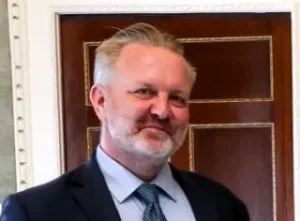
Joseph Fenwick:
‘The solar observatories of Brú na Bóinne’
Bio:
Joe Fenwick is the Archaeological Field Officer (Senior Technical Officer) in the School of Geography, Archaeology and Irish Studies, University of Galway. He received BA degree in Archaeology/Greek & Roman Civilizationfrom UCD in 1991 and an MA degree in Archaeology from UCG (NUI Galway/University of Galway) in 1997, the title of his thesis being A study of Rathra: a multivallate enclosure in Co. Roscommon. Prior to joining the Department of Archaeology, University of Galway, firstly as a research and teaching assistant and currently as its Archaeological Field Officer, Joe contributed to a number of major research projects including Knowth Excavations (UCD), The Tara Survey (The Discovery Programme) and the ArchaeoGeophysical Imaging Project (NUI Galway/University of Galway). As Archaeological Field Officer (Senior Technical Officer) he specialises in the area of field research, scientific survey techniques and GIS with a particular interest in the Late Prehistoric royal sites of Rathcroghan, Co. Roscommon and Tara, Co. Meath, in addition to the Brú na Bóinne UNESCO World Heritage Site, Co. Meath. He is currently engaged in experimental archaeological research on the subject of Crafting the Knowth macehead. Joe is a member of the Institute of Archaeologists of Ireland (IAI), the Meath Archaeological and Historical Society (MAHS) and the Royal Society of Antiquaries of Ireland (RSAI), serving as its Vice President for Connacht in 2022-23.
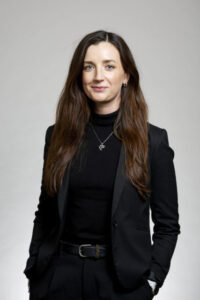
Dr Laura Hayes:
‘The Active Sun Up Close: Solar Flares and Space Weather with the Solar Orbiter mission’
Bio:
Dr. Laura A. Hayes is a Royal Society – Research Ireland University Research Fellow at the Dublin Institute for Advanced Studies (DIAS), based at Dunsink Observatory. Her research centers on high-energy processes in the solar atmosphere, particularly solar flares and their role in driving space weather effects throughout the heliosphere. She specialises in flare diagnostics using X-ray and EUV observations, and is an expert in the study of quasi-periodic pulsations (QPPs), energetic particle acceleration, and the ionospheric signatures of solar flare events. Laura earned her PhD in 2018 from Trinity College Dublin (TCD), with her doctoral work jointly conducted at TCD and NASA’s Goddard Space Flight Center. She subsequently held a NASA Postdoctoral Program (NPP) Fellowship at GSFC, followed by an ESA Research Fellowship at the European Space Agency’s ESTEC facility in the Netherlands. She joined DIAS in 2024 to begin her Royal Society – Research Ireland Fellowship and to establish her research group. She is Co-Investigator for the Solar Orbiter/STIX instrument and actively involved in the Solar Orbiter science teams and working groups and contributes to international efforts in coordinated solar flare observation campaigns. Beyond research, she plays a leadership role in heliophysics software development and community infrastructure through the SunPy project.
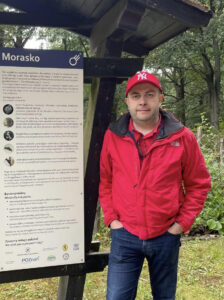
Michael O Connell:
“2026 Total Solar Eclipse”
Bio:
Michael is an amateur astronomer residing in Co. Kildare. Michael is a former chairperson of the Irish Federation of Astronomical Societies (IFAS) and Midlands Astronomy Club (MAC). Aside from chasing eclipses, Michael is also an active solar observer, member of the BAA, and operates 3 meteor cameras from his home as part of the Global Meteor Network (GMN). Michael has previously presented to the Galway Astrofest on the topics of ‘Building a 16″ Dobsonian Telescope’ and ‘Observing the Southern Skies’.
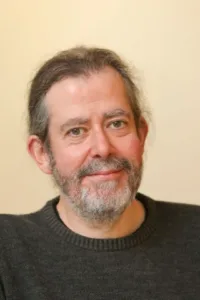
Dr Matt Redman:
‘The Future of the Sun’
Bio:
Dr Matt Redman completed his doctoral studies under Professor John Dyson at the University of Manchester, following him to the University of Leeds. A new model for one of the earliest manifestations of the birth of the most massive stars was developed. Upon graduation he moved back to the Jodrell Bank Observatory at the University of Manchester as a postdoctoral fellow with Professor John Meaburn. Using instruments installed on the Anglo- Australian Telescope, led to the discovery of highly explosive outbursts in objects known as Planetary Nebula, which had previously been thought to evolve in a steady fashion. This was followed by the discovery of evidence for sequential, nested supernova explosions in two peculiar objects, the Pencil Nebula and the Honeycomb Nebula. He worked with Professor Jonathan Rawlings, at University College London researching the formation of sun-like stars and in collaboration with Dr Eric Keto in Harvard. An IRCSET postdoctoral fellowship at the Dublin Institute for Advanced Studies was followed by a faculty appointment at NUIG in 2004. His research programmes now bring together the themes of star formation and star destruction and I have studied how low mass star formation can proceed in the vicinity of violent massive stars. A recently new research theme, inspired by the widespread discovery of exoplanets, is to investigate the effects of the destruction of planets on the evolution of sun-like stars as they evolve to form (coincidentally, and confusingly misnamed!) planetary nebulae.
Saturday 31st Jan. 12:30 – 1:30 pm Lunchtime Workshop
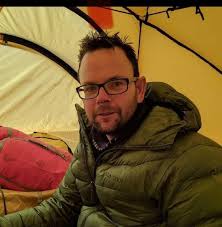
Stephen Kershaw:
‘Solar Filters and Equipment’
Bio:
Ktec Telescope have been a permanent feature at the Galway Astronomy Festival for many years now. They have brought the wow factor to each festival with their amazing display of astronomical equipment. Their generosity to the festival has been unbelievable over the years. Stephen Kershaw will be presenting this section of the festival and will be on hand to give advice on Solar filters and equipment. He is also there on the day with telescopes etc. and will be glad to answer any equipment related questions you may have. Not to be missed if you have any practical astronomy queries.
Saturday 31st Jan. 7:30 pm – Festival Dinner
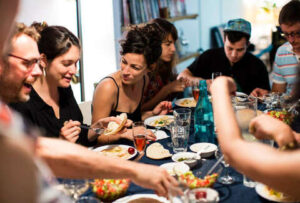
Why not finish off our busy festival with a relaxed and fun festival dinner where you can mingle with our guest speakers and fellow attendees and discuss what we hope will be a fantastic event.
Hotel Accomodation: If you are planning on staying at the Ardilaun Hotel, Please use the following code when booking online/by phone to get the Festival room rate: #211177